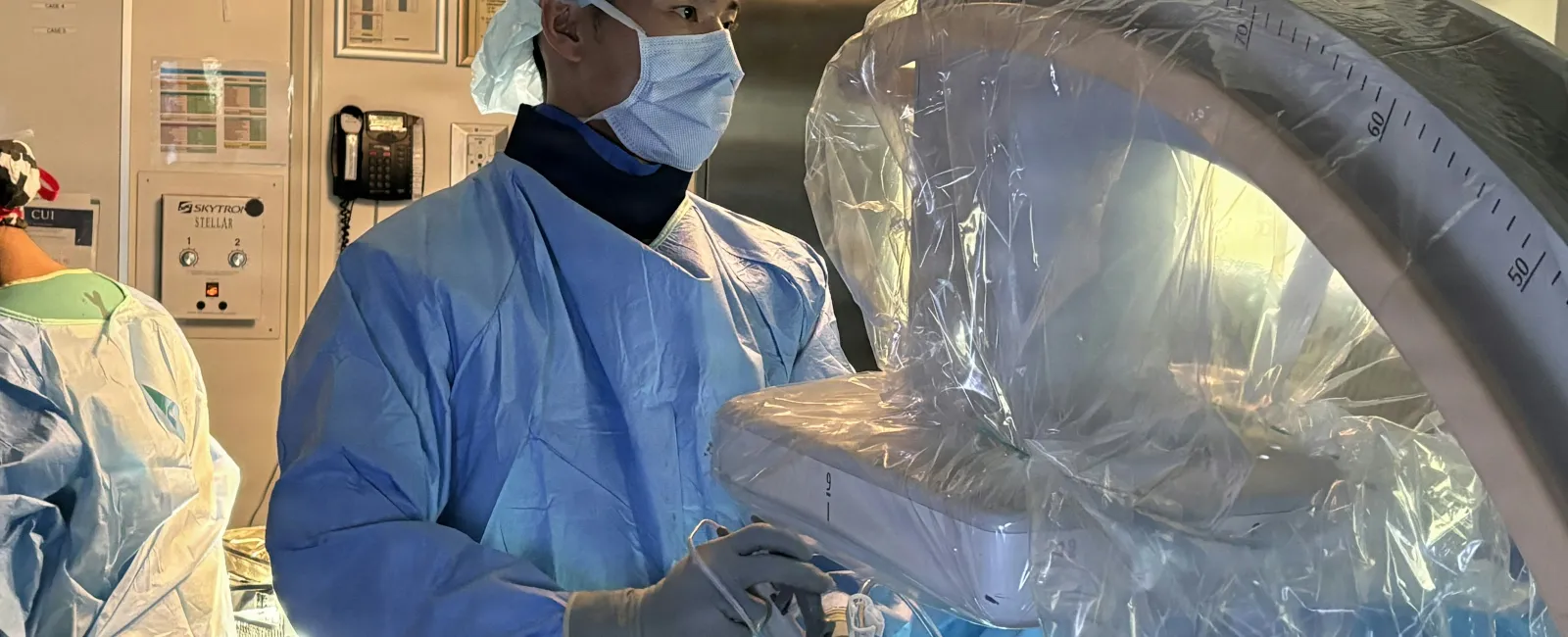
If you've been told your prostate is too large for medication, laser therapy, or a minimally invasive in-office procedure, you may be wondering what comes next. For decades, the answer was open surgery through a large abdominal incision, followed by a week in the hospital and a long, painful recovery. Today, there's a better option.
Robotic simple prostatectomy is changing how urologists treat severely enlarged prostates. It delivers the same definitive results as traditional open surgery while dramatically reducing pain, blood loss, and downtime. For men in Atlanta and across the country, it has quickly become a leading choice for treating advanced cases of benign prostatic hyperplasia (BPH).
Here's what you need to know.
What Is Robotic Surgery?
Robotic surgery is a form of minimally invasive surgery in which a surgeon controls precision instruments through a robotic system, most commonly the da Vinci Surgical System. The surgeon operates from a console near the operating table, viewing the surgical field in magnified 3D high definition while guiding tiny instruments through small keyhole incisions.
To be clear, the robot does not perform the surgery. Your urologist does. The robotic platform simply translates the surgeon's hand movements into smaller, steadier, more precise motions inside the body. The result is better visualization, more accurate dissection, and a procedure that's far gentler on surrounding tissue.
What Is a Simple Prostatectomy?
A simple prostatectomy is a surgery that removes the enlarged inner portion of the prostate gland while leaving the outer capsule intact. This is an important distinction from a radical prostatectomy, which removes the entire prostate and is used to treat prostate cancer.
A simple prostatectomy treats benign disease, specifically a severely enlarged prostate caused by BPH. By removing the obstructive inner tissue, the procedure restores normal urine flow and relieves the symptoms that come with an oversized prostate, including:
- Difficulty starting or maintaining a urine stream
- Frequent urination, especially at night
- A feeling of incomplete bladder emptying
- Urinary retention
- Recurrent urinary tract infections
- Bladder stones
When performed robotically, the procedure is called a robotic simple prostatectomy or robot-assisted simple prostatectomy (RASP).
What Is the Best Surgery for an Enlarged Prostate?
The honest answer is that the best surgery depends on the size of your prostate, the severity of your symptoms, your overall health, and your treatment goals. Urologists generally consider several options:
- UroLift is a minimally invasive in-office option that uses small implants to hold prostate tissue open. It's ideal for smaller prostates and preserves sexual function.
- TURP (transurethral resection of the prostate) has long been the gold standard for moderately enlarged prostates and is performed through the urethra.
- Laser therapies like HoLEP and GreenLight remove or vaporize obstructive tissue and work well for many men.
- Prostate artery embolization shrinks the prostate by blocking its blood supply and is sometimes used in patients who aren't surgical candidates.
- Robotic simple prostatectomy is typically reserved for very large prostates, generally those exceeding 80 to 100 grams, where smaller procedures may not be effective.
- Aquablation is a robot-assisted surgical procedure that uses an image-guided, high-pressure water jet to remove excess prostate tissue.
For men with significantly enlarged glands, robotic simple prostatectomy often delivers the most complete and durable relief.
How Robotic Simple Prostatectomy Works
The procedure is performed under general anesthesia and typically takes two to three hours. Your surgeon makes five or six small incisions in the lower abdomen, each about a centimeter long. Through these openings, the robotic instruments and a high-definition camera are introduced.
Working from the surgical console, your urologist carefully separates and removes the enlarged adenoma, the inner portion of the prostate responsible for the obstruction. Once the tissue is removed, the bladder and urethra are reconstructed, and a temporary catheter is placed to allow healing.
Most patients spend one night in the hospital. Some are discharged the same day. The catheter usually stays in place for about a week.
Why Patients and Surgeons Are Choosing the Robotic Approach
Compared to open simple prostatectomy, the robotic approach offers a clear list of benefits backed by clinical research:
- Significantly less blood loss
- Lower rates of blood transfusion
- Smaller incisions and minimal scarring
- Reduced postoperative pain
- Shorter hospital stay, often just one night
- Faster return to work and normal activity
- Excellent long-term improvement in urinary symptoms
A 2020 review published in PubMed Central found that robotic simple prostatectomy provides outcomes equivalent to open surgery for symptom relief while substantially reducing perioperative complications. For most patients with very large prostates, it represents the best of both worlds: the definitive results of surgery without the trauma of a large incision.
What Recovery Looks Like
Most men return home the day after surgery with a catheter in place. Light activity, including walking, is encouraged right away. Heavy lifting and strenuous exercise are off the table for about four to six weeks.
By the time the catheter is removed, usually within seven to ten days, most patients are already noticing dramatic improvement in urinary flow. Full recovery and the final stabilization of urinary function typically take six to eight weeks.
Side effects are uncommon but can include temporary urinary leakage, mild burning during urination, and short-term changes in ejaculation. Your urologist will walk you through what to expect at each stage.
Is Robotic Simple Prostatectomy Right for You?
You may be a strong candidate if you have:
- A prostate larger than 80 grams confirmed by imaging
- Persistent BPH symptoms that haven't improved with medication
- Recurrent urinary retention, bladder stones, or repeated UTIs
- Already tried less invasive procedures without lasting relief
- Good general health for surgery
The only way to know for sure is a thorough evaluation with a board-certified urologist who can review your imaging, symptoms, and medical history.
Expert BPH Care in Atlanta
At Advanced Urology, our team treats more enlarged prostates than nearly any practice in the Southeast. With 12 clinic locations, 6 state-of-the-art surgery centers, and 35 highly skilled urology providers across metro Atlanta, we offer the full spectrum of BPH treatment, from UroLift and prostate artery embolization to robotic simple prostatectomy in our Centers of Excellence.
If you're living with the daily frustration of an enlarged prostate, you don't have to. A clear path forward starts with a conversation.
Schedule a consultation today or call to find out whether robotic simple prostatectomy is the right next step for you.