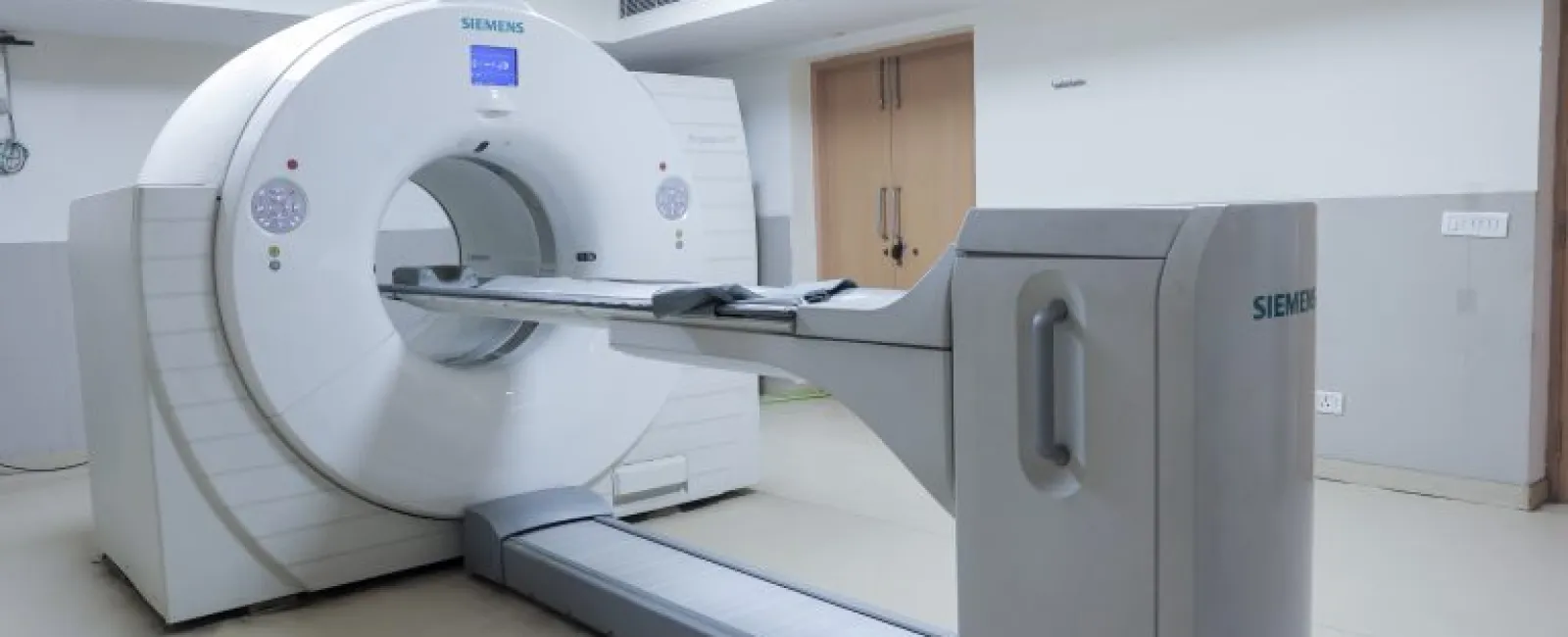
When your doctor recommends advanced imaging, you may hear two common terms: PET scan and CT scan. Although they sound similar, these tests work in different ways and provide different information about your health. At Advanced Urology, we believe that understanding your diagnostic options helps you feel informed, empowered, and prepared for the next steps in your care.
What Is a PET Scan?
A PET scan (Positron Emission Tomography) looks for metabolic activity in your body. Think of it as a heat map that shows which cells are working harder than others. When cells are more active, like cancer cells often are, they light up on the scan.
During a PET scan procedure, you receive a small injection of a radioactive sugar solution called a tracer. Cancer cells are sugar-hungry, so they absorb more of this tracer than normal cells, making them stand out as bright spots in the image.
What Is a CT Scan?
A CT scan, on the other hand, is more like a detailed 3D photograph of your body's anatomy. It uses X-rays to create cross-sectional images that show the size, shape, and location of structures inside your body. While a regular X-ray is like looking at your shadow on a wall, a CT scan is like being able to slice through that shadow and see every layer.
CT scans excel at showing structural details. They can reveal the exact size of a tumor, whether bones are affected, or if there's fluid where there shouldn't be. They're quick, usually taking just a few minutes, and don't require any special preparation.
The Key Differences Between a PET and a CT Scan
So what's the real difference between a PET scan and a CT scan? Think of it this way: a CT scan shows you the architecture of a building, while a PET scan shows you which lights are on inside. Both give valuable information, but they're looking at completely different things.
CT scans are great for seeing physical structures. They'll show you if something is there and how big it is. PET scans reveal function and activity. They show whether cells are behaving normally or hyperactive, which often indicates disease.
However, neither test is necessarily "better" than the other. They're complementary tools that answer different questions. Your doctor chooses based on what information they need. Sometimes, you might need both, or even better, a combination PET CT scan that merges both types of imaging into one powerful diagnostic tool.
When Doctors Use Each Type of Scan
A PET scan for cancer detection and staging has become increasingly common, especially for certain types like prostate, lung, and lymphoma. This is because PET scans can detect cancer that's too small to see on a CT scan or cancer that's hiding in unexpected places. They're particularly valuable when doctors need to determine if cancer has spread or if treatment is working.
CT scans are often the first imaging test ordered when doctors suspect something structural is wrong. They're excellent for emergency situations, checking for kidney stones, examining lung problems, or evaluating injuries. They provide quick, detailed anatomical information that helps doctors make rapid decisions.
The Rise of Specialized PET Scans
Not all PET scans are the same. The PSMA PET scan represents a breakthrough in prostate cancer imaging. At Advanced Urology, we've seen how this specialized scan has revolutionized prostate cancer detection. PSMA (Prostate Specific Membrane Antigen) is a protein found on prostate cancer cells. By using a tracer that targets this specific protein, PSMA PET scans can detect prostate cancer with remarkable accuracy, even when PSA levels are extremely low.
This specificity matters enormously for our patients. Traditional imaging might miss small areas of cancer spread, but PSMA PET scans light them up. This means more precise treatment planning and better outcomes.
How Does a PET Scan Work in Practice?
Many patients ask, "How does a PET scan work exactly?" After you receive the tracer injection, you'll rest quietly for about 45 to 60 minutes. This waiting period lets the tracer circulate and accumulate where it needs to. Some patients bring a book or listen to calming music during this time.
Then, you'll lie on a table that slides through the PET scanner. The machine detects the radiation from the tracer and creates images showing where the tracer has collected in your body. The actual scanning usually takes 20 to 30 minutes. You won't feel anything during the scan itself, though staying still can sometimes be the hardest part.
Making the Right Choice for You
At Advanced Urology, we often combine imaging types to get the complete picture. A PET CT scan gives us both the metabolic information from the PET and the anatomical detail from the CT in one session. This combination has become the gold standard for many cancer evaluations because it answers both "where" and "what's happening" in a single test.
Your doctor will recommend the imaging that best fits your specific situation. Factors they consider include your symptoms, previous test results, the type of cancer suspected or being monitored, and what treatment decisions need to be made.
Moving Forward with Confidence
Understanding the difference between these imaging options helps you participate more actively in your healthcare decisions. Whether you need a PET scan, CT scan, or combination imaging, knowing what to expect removes much of the anxiety from the process.
Advanced imaging has transformed how we detect and treat cancer, turning what was once invisible into clearly mapped territory. These tools give us the information needed to create personalized treatment plans that target disease precisely while protecting healthy tissue.
If your doctor has recommended imaging, don't hesitate to ask questions about which type and why. At Advanced Urology, we believe informed patients make the best partners in their healthcare journey. With 12 locations across Atlanta, we're here to provide the answers and care you need.
Ready to learn more about advanced imaging options? Contact Advanced Urology to discuss your imaging needs with our specialists.